
The Anti-Opt-In Manifesto

Image created by the author using ChatGPT
On August 22, 2007, I rolled up the doors of Toca da Empada, the bakery I founded with my wife. Over the next 12 years, we sold more than five million empadas. It was a bricks‑and‑mortar success story, born from systems thinking and relentless execution.
That same fall, Amazon kept nudging me with recommendations for a new book: The 4‑Hour Workweek.
On October 29, I bought it. Devoured it in a single sitting. And in doing so, set fire to the careful plans I had laid.
My life would never be the same.
Looking back, I can trace my entrepreneurial trajectory through three books:
- 2000 — Rich Dad, Poor Dad. Robert Kiyosaki made it clear: if I wanted to prosper, I needed my own business.
- 2001 — The E‑Myth Revisited. Michael Gerber convinced me that a business is a system of subsystems, working in harmony to deliver a unique result. Toca da Empada was born from this insight.
- 2007 — The 4‑Hour Workweek. Tim Ferriss showed me that a business could be architected to run without employees, and opened my eyes to the leverage of an online business.
For the next 12 years, I lived a dual life (a triple one if you count managing my wife’s career as a professional singer... but that’s another story).
Offline, I was running a growing chain of bakeries.
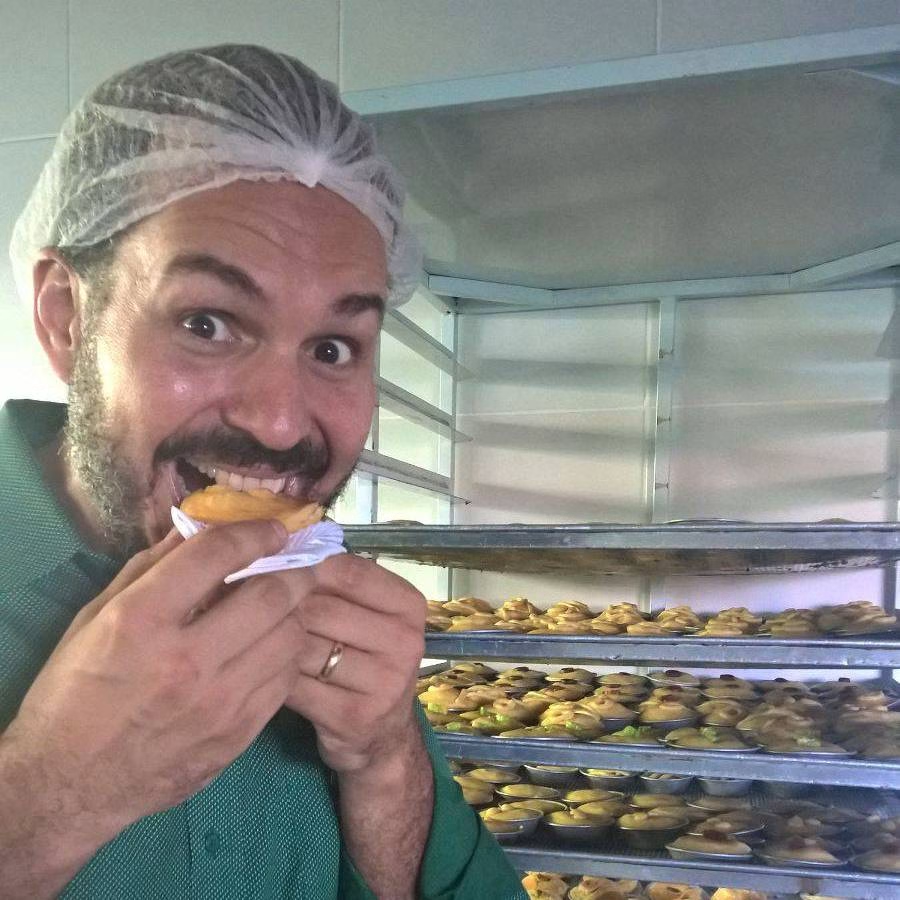
From my secret files
Online, I was building a small corner of the internet. First as HowToMasterNLP.com in 2007, later rebranded to dailyNLP.com.
Here’s where the oddest conundrum emerged.
Offline, I instinctively knew how to market my bakeries. The results speak for themselves.
Online, nothing seemed to work. Despite the courses I bought, the instructions I followed, and the countless hours I invested, my efforts consistently fell flat. The internet felt like a different animal altogether, one I could not tame.
That disconnect gnawed at me.
Why could I sell millions of empadas face‑to‑face, but struggle to sell even a handful of digital products online?
Why did marketing feel natural in the real world and artificial on the web?
Those questions became the seeds of this manifesto, the search for a way of marketing online that feels as real, as natural, and as trustworthy as handing someone a taste of what you’ve made.
Start with Part I: The Broken System →