
Part IV: In Plain Sight
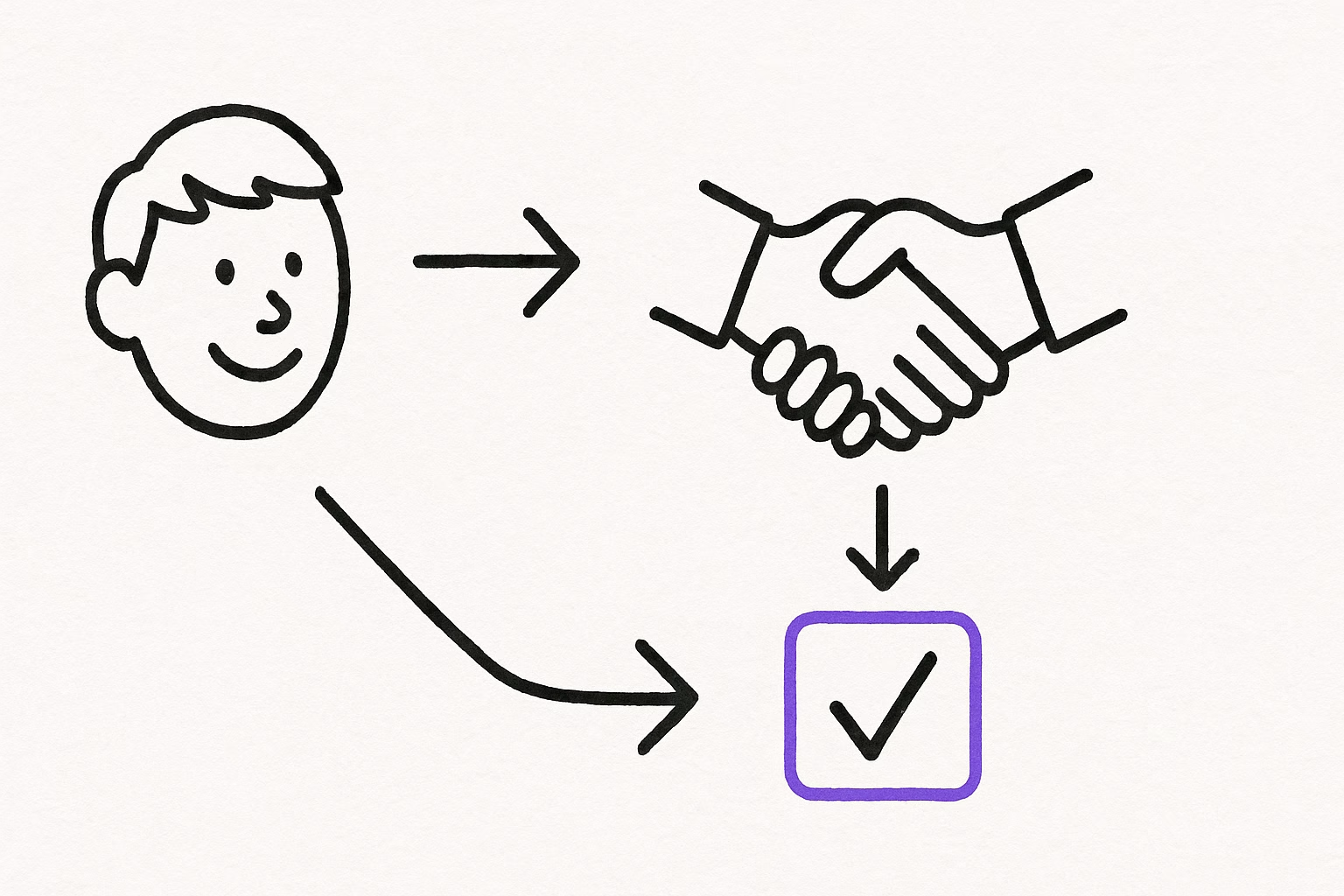
Image created by the author using ChatGPT
What I've been sharing with you isn’t a clever idea or a hopeful philosophy.
It’s not theory at all.
It’s how the world already works, right in front of us, every single day.
You can walk into a store, scroll YouTube, or sign up for a free trial and watch it happen.
Once you see it, you can’t unsee it.
Mr Beast
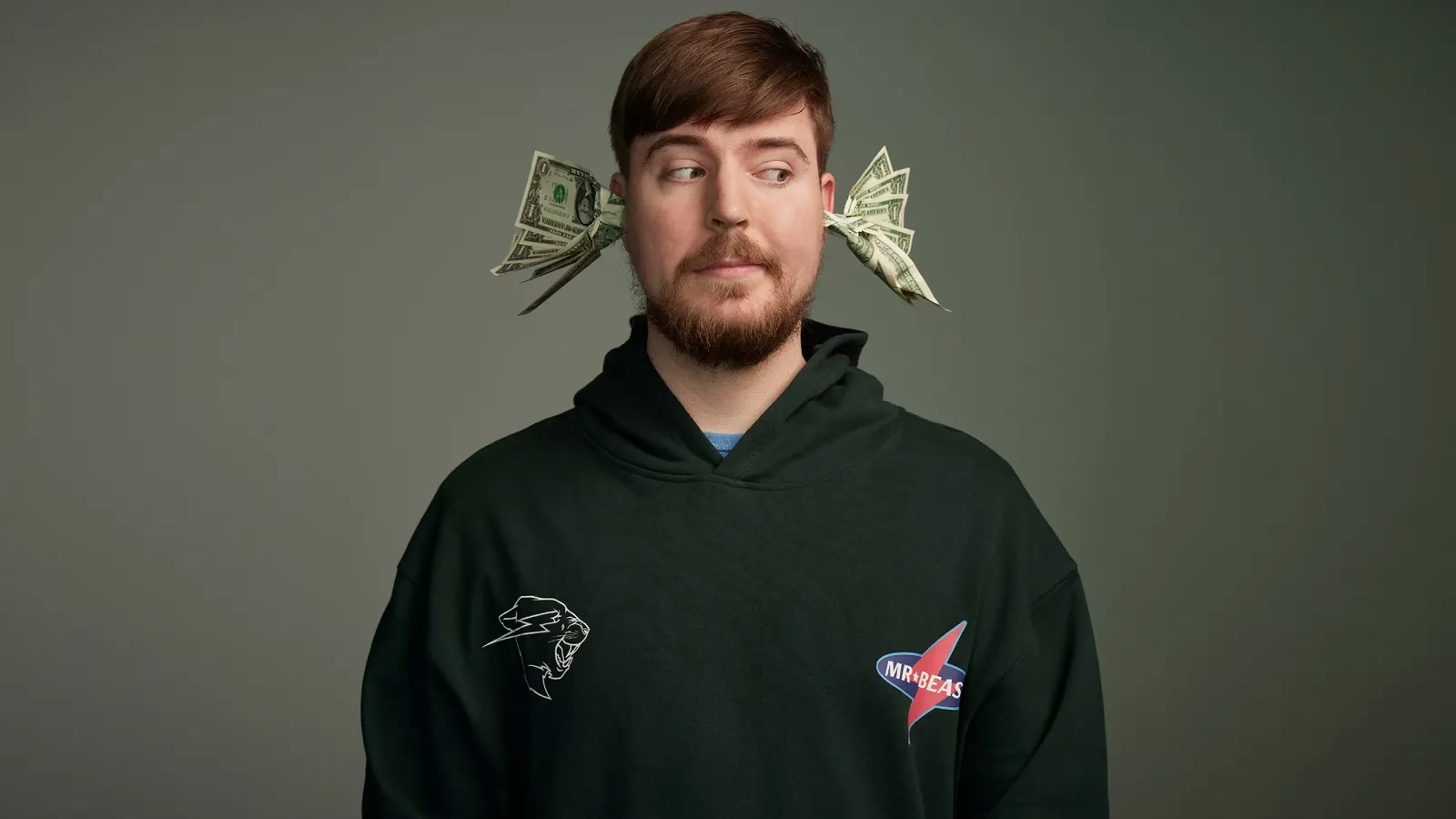
Image credit: Rolling Stone
Look at MrBeast.
He didn't become one of the most successful marketers on the planet by capturing emails or locking viewers behind gates.
He stages experiences so outrageous, so magnetic, that people want to be part of them. When he buried himself alive for 50 hours, gave away a private island, or recreated Squid Game with 456 contestants and a $456,000 prize, the experience itself became the product.
Each video pulls in tens or even hundreds of millions of views. His Squid Game recreation alone drew over 500 million. That scale of attention wasn’t bought with ads or funnels; it was earned through spectacle people couldn’t resist sharing.
The numbers prove it: in 2022, MrBeast’s channel generated over $54 million, largely from advertising and sponsorships tied directly to the reach of these experiences.
Pay attention to the underlying truth: it’s more than revenue... it’s trust.
Viewers see him deliver on wild promises again and again, and that consistency builds credibility.
People don’t wonder if the next giveaway is real. They know it is. The show is the taster, and the spoon creates both resonance and conversion at a scale traditional funnels can’t touch.
Let's look at a two of the ventures he created from the success of his YouTube channel.
The virtual launch that became a phenomenon
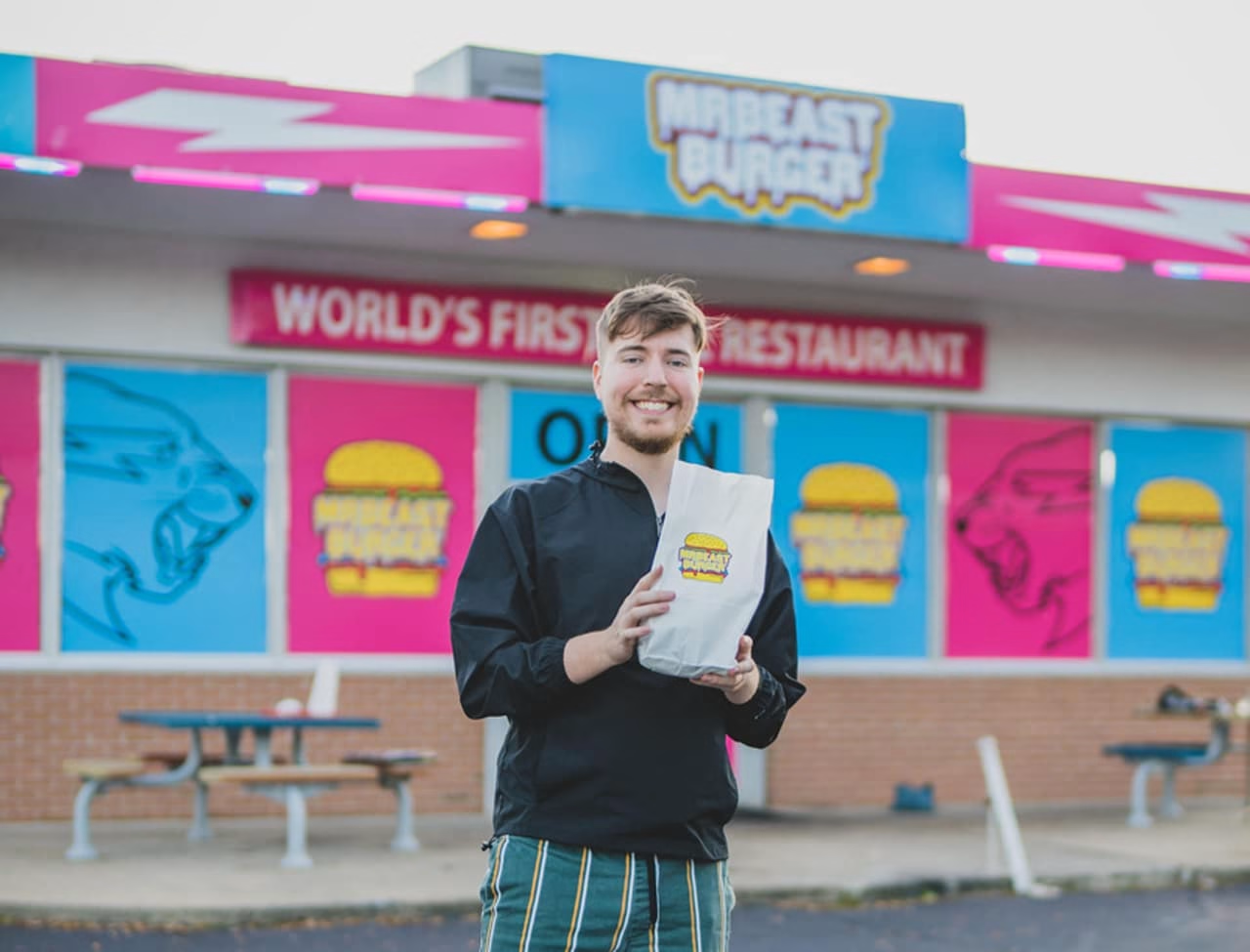
Image credit: MrBeast Burger
In December 2020, Mr Beast launched 300 virtual locations of his new burger joint in a single day.
That scale matched established burger brands overnight but without the burden of brick-and-mortar overheads.
Within hours, fans across the country were ordering from ghost kitchens bearing his name. Social media lit up with photos of MrBeast Burger packaging, YouTube was flooded with reaction videos, and delivery apps struggled to keep pace with demand.
It became a cultural moment.
MrBeast had turned a simple burger drop into a nationwide event, powered by trust and anticipation rather than ads or traditional rollout campaigns and, obviously, email captures.
By 2022, the chain expanded to over 1,700 ghost kitchens, stretching across the U.S. and internationally, and even opened a flagship physical location at the American Dream Mall.
That grand opening became a phenomenon in itself: more than 10,000 fans lined up, some waiting overnight, to catch a glimpse of MrBeast and be part of the event.
The lines snaked through the mall, news crews broadcasted the frenzy, and social media buzzed with livestreams and photos. What should have been a restaurant opening felt more like a concert or sports event, a living demonstration of how trust and spectacle can mobilize thousands in the real world.
On that first day alone, the brand sold 6,212 burgers, three times more than expected.
The app exceeded 1 million downloads in record time, crashing into the top of app store charts, while social feeds filled with screenshots of fans placing their first orders.
Within twelve months, the brand scraped past $100 million in sales, a milestone that usually takes legacy restaurant chains years to reach.
Behind every order was proof of how trust and community move markets: teenagers convincing parents to drive them across town, families lining up to try the burger they had only seen on YouTube, and delivery drivers overwhelmed by the volume of pings coming from MrBeast’s ghost kitchens.
It went beyond food at this point. It was a movement, an economy powered by attention, resonance, and trust.
Fans didn’t hesitate to buy because the experience was magnetic, immediate, and communal.
Chocolate that builds community
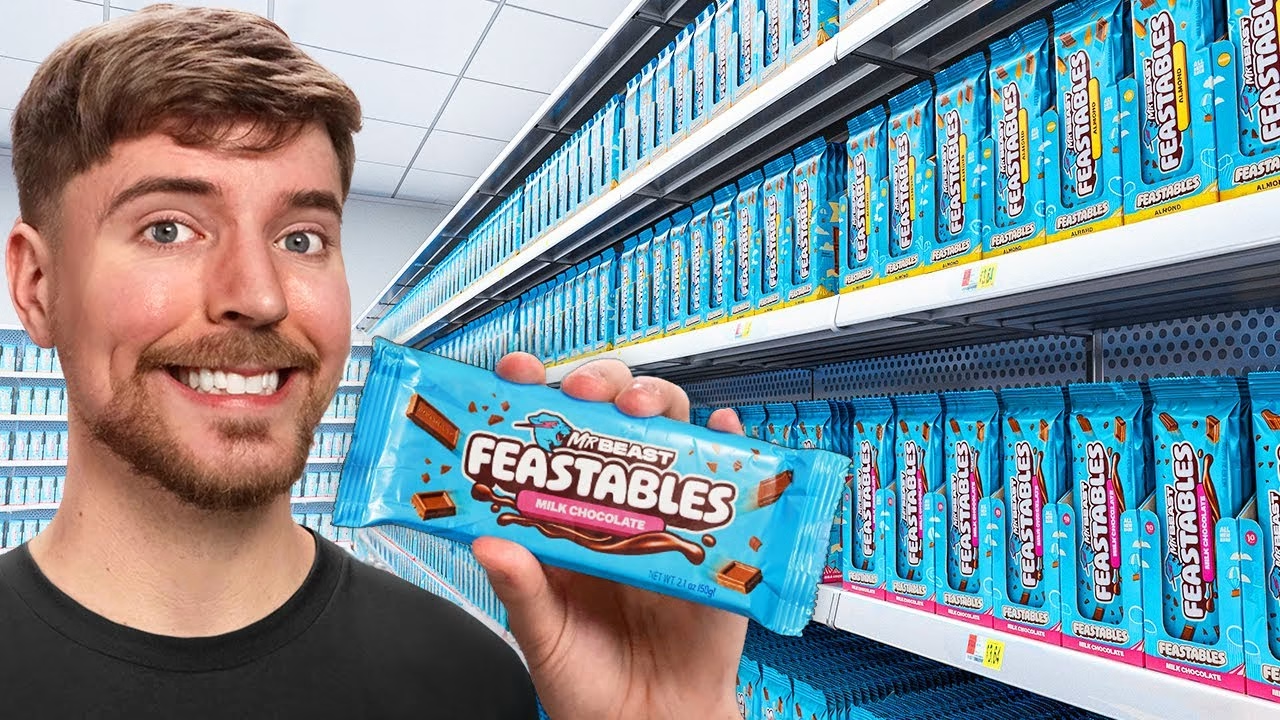
Image credit: MrBeast
Feastables hit the shelves in 2022.
Within months, the company moved $10 million worth of chocolate bars, fueled by an audacious sweepstakes: a real-life “Charlie and the Chocolate Factory” competition judged by Gordon Ramsay. Fans tore into bars not just for the taste, but for the golden tickets hidden inside. These tickets unlocked once-in-a-lifetime experiences.
The Feastables products triggered lines at Walmart, viral unboxings on TikTok, and a brand that felt more like a cultural movement than a candy startup.
By 2024, Feastables had become a heavyweight in the snack aisle, pulling in $215 million in net revenue, nearly half of all Beast Industries’ earnings. To put that in perspective, it outpaced the early growth of many legacy confectionery brands that had decades of distribution advantage.
Overall, Beast Industries soared to $473 million in revenue in 2024, doubling its size in a single year.
The lesson was clear: when you fuse trust, community, and product experience, even something as familiar as a chocolate bar can break into a saturated market and scale faster than traditional launches ever could.
Feastables shows that when you let the product speak, buying becomes less about marketing and more about resonance.
These cases, from burger craze to chocolate fandom, prove the same pattern holds across industries.
The spectacle is the tasting: experience drives trust, and trust turns into conversion. It’s how MrBeast sells cars, burgers, and candy without ever collecting emails.
If let your work be the experience that matters, you won't be inventing something new or blazing a new risky trail. You’ll just be facilitating what people already do every day, in supermarkets, movie trailers, and YouTube stunts.
Costco
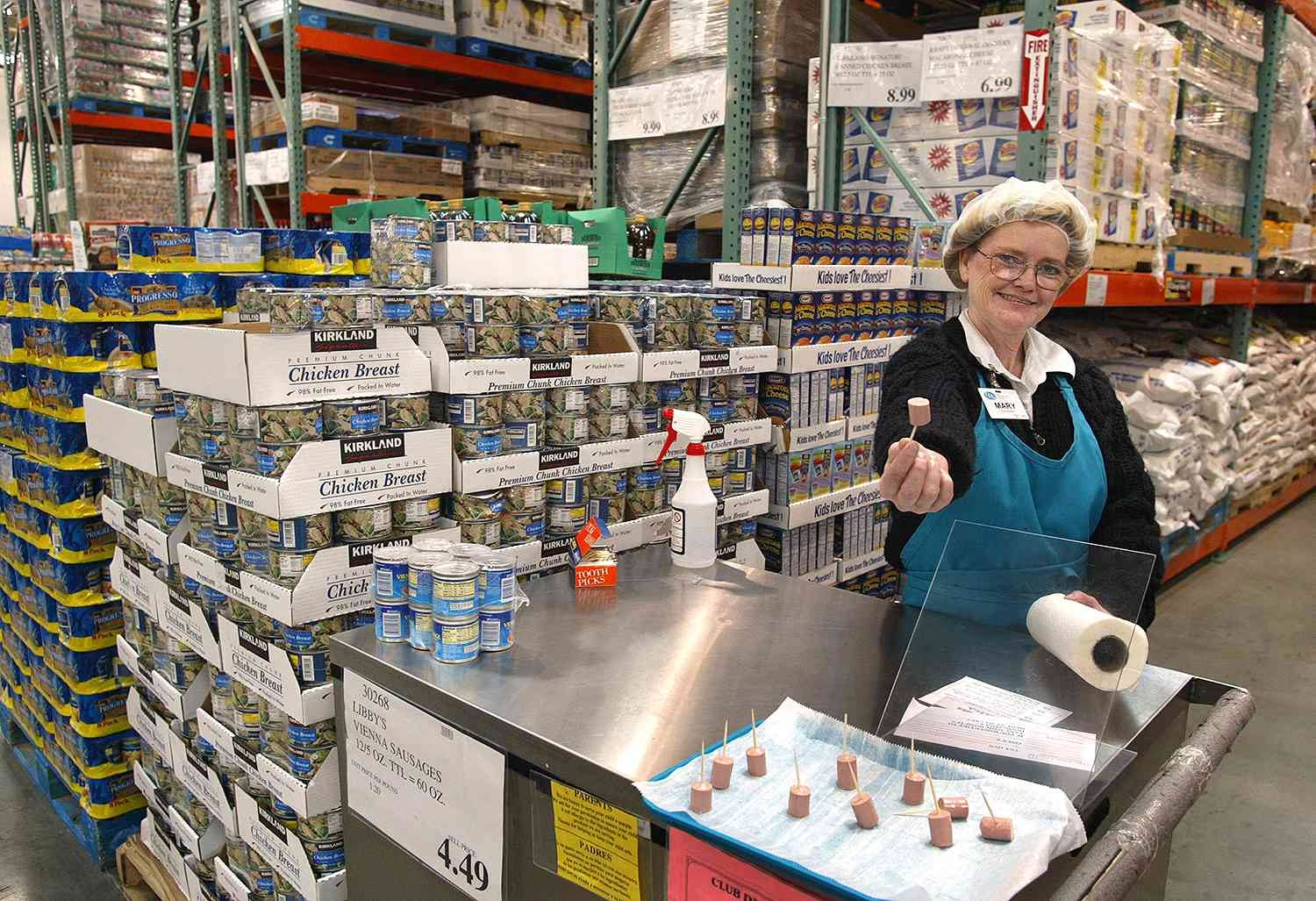
Image credit : Tim Boyle/Getty
At this retail behemoth, sampling is a billion-dollar growth engine.
A single taste on the tip of a toothpick can turn a hesitant shopper into a loyal customer, moving millions of dollars in product every year.
According to industry reports, Costco has credited free samples with helping drive as much as 30% of certain product sales, and suppliers often pay dearly for the chance to be featured.
The psychological principle is simple: one bite lowers resistance, makes the product familiar, and turns curiosity into commitment. People try it, they like it, they buy it, often in bulk.
Once again, no email opt-in.
It's resonance tested in real time, multiplied across Costco’s 800+ warehouses worldwide. The result is proof at scale: samples create trust and move inventory at a pace digital opt-in funnels can only dream of.
Costco’s results are legendary in retail circles.
Sampling has transformed everyday items into bestsellers, creating ripples across entire categories:
- Beer brands have reported 71% higher sales after being sampled.
- Frozen pizza varieties skyrocketed by 600%, with nearly every purchase tied directly to a sample bite.
- Wines surged by more than 300%.
- Cosmetics like lipstick and mascara leapt by 500% once shoppers tried them in the aisles.
These spikes are patterns that repeat, week after week, across Costco’s warehouses.
The ratios prove the point even more forcefully. Nearly 100% of frozen pizza purchases came from people who had just sampled it. Even in yogurt, 60% of sales were driven by tastings.
When you see numbers that absolute, it becomes undeniable: the tasting does the selling.
It goes beyond the metrics. The lived experience is unforgettable.
Stations serving spinach mozzarella ravioli, chicken salad on pretzel bread, or Kirkland vanilla ice cream blended with Bailey’s milkshakes have stopped shoppers in their tracks, pulling them back for seconds and thirds.
Many walk away with boxes in their carts they never planned to buy.
Over time, this practice has catapulted brands from obscurity into household recognition. Think about it... frozen foods, niche wines, and even cosmetics gaining traction from a single bite.
Multiplied across Costco’s 800+ warehouses, that effect turns free bites into billions of dollars in revenue and proves that the shortest path to trust is a taste.
SaaS
In SaaS, free trials are everywhere, and for good reason.
A trial is just another kind of experience, a way to let someone feel the product before deciding.
Dropbox famously grew from zero to 500 million users on the back of free trials and referral bonuses. In its early days, the product felt almost magical: install a small folder on your computer and suddenly your files synced seamlessly across devices.
Dropbox put the product directly in people’s hands. Every new user got a taste of the utility, and when they shared it with friends, they earned more free storage.
What a clever twist on the Experience Paradigm!
The results spread like wildfire: referral-driven signups fueled exponential growth, turning Dropbox into one of the fastest-growing SaaS companies in history and proving that hands-on experience can scale faster and more credibly than any ad campaign.
The chat tool that dominated offices
Slack became the dominant workplace chat tool by lowering the barrier to entry to zero.
Entire teams could onboard for free in minutes, without a sales call, a credit card, or IT approval. Once inside, the product revealed its magic almost immediately: searchable conversation threads, seamless file sharing, and integrations that connected dozens of other apps into one hub.
Teams that had been drowning in email suddenly found themselves moving faster, collaborating more fluidly, and cutting response times in half. The more they used it, the more indispensable it became.
Within months, Slack was spreading through offices virally. Employees invited colleagues, departments adopted it bottom-up, and executives realized they couldn’t function without it.
Slack didn't need to force conversion to paid plans; it was inevitable. Slack’s trajectory from launch in 2013 to a $7 billion valuation in 2018 was fueled by the irresistible power of experience turning into trust.
HubSpot, Zoom, and Canva follow the same playbook: let people use the product, see it working in their own context, and then the sale becomes inevitable.
Data shows that SaaS companies with free trials can see conversion rates anywhere from 10% to 25%, depending on the market, far higher than traditional cold sales funnels.
The lesson is clear: experience is stronger than persuasion, and experience works just as well in digital markets as it does in ice cream shops or Costco aisles.
The moment everything changed
Then there’s my own story.
The shift was immediate and impossible to ignore. For years, I had followed the funnel playbook, tinkering with lead magnets and drip sequences, waiting for some promised conversion that rarely came.
One day, I stripped it all away and decided to let my work speak for itself.
The moment I stopped hiding behind complex funnels and started giving people a direct experience, the difference was night and day.
Orders didn’t trickle... they surged!
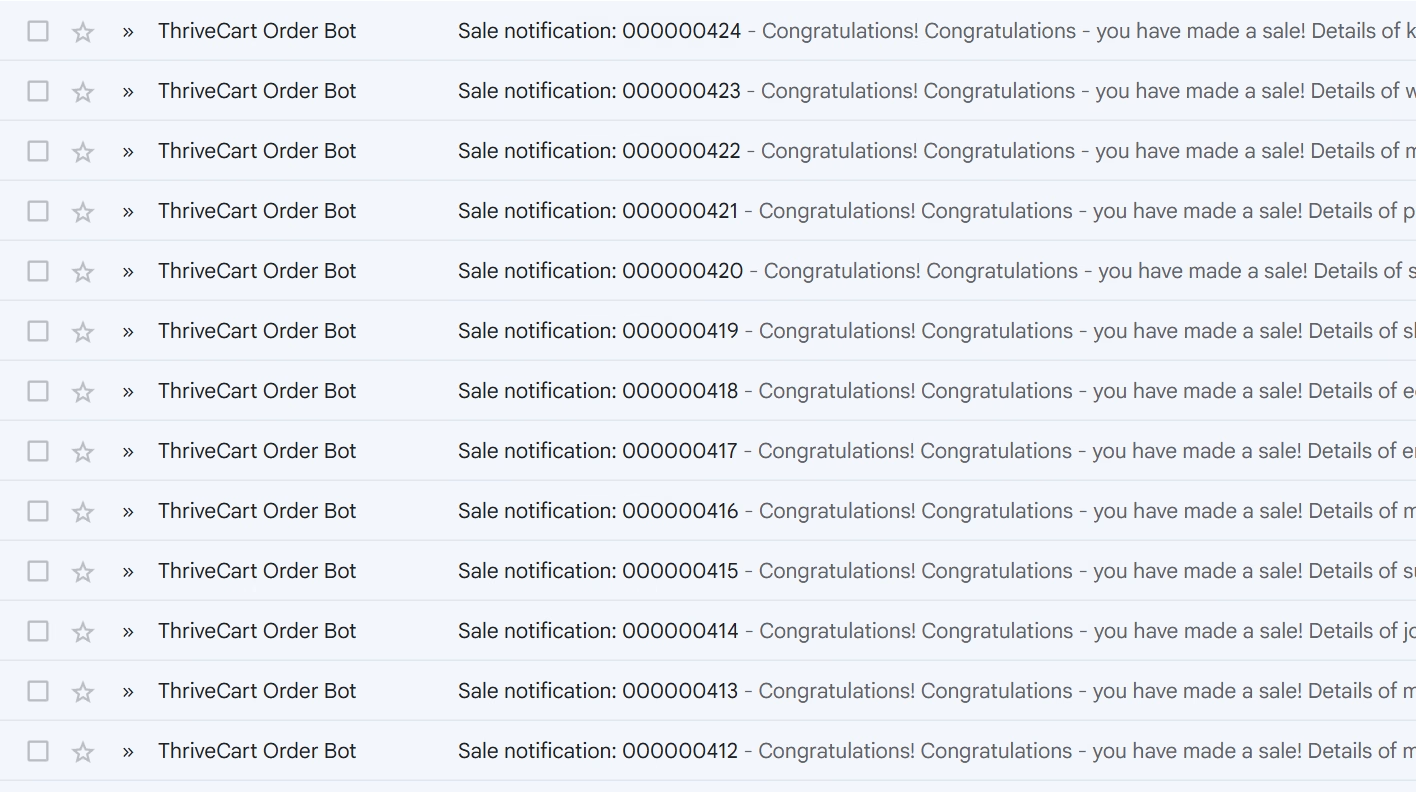
It didn't take weeks. It took hours for the phenomenon to begin.
Not one or two, but streams of them. It was the first time in 18 years I felt momentum that was natural. The sales were coming from people who had just experienced my work and wanted more.
Alongside the sales came something even more powerful: real messages.
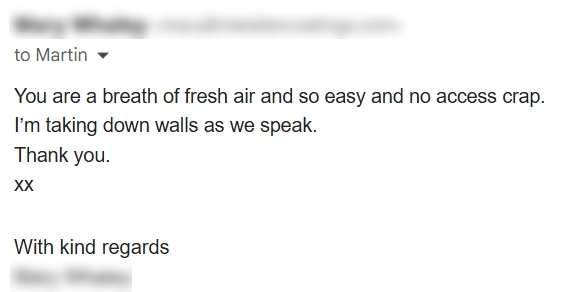
Straight from my inbox
People reached out through my contact form, not because some widget on my website nudged them, but because they resonated and felt compelled to send me a message.
They wanted to connect.
They wanted to go deeper.
For the first time, I was holding conversations.
I didn't need scripts, countdown timers, or persuasion gimmicks. It was pure resonance turned into relationships and revenue.
The proof was staring back at me in every email and every order notification: when you remove the pressure and let the work itself be the experience, people don’t hesitate. They move toward you naturally.
That deep realization, that trust could sell faster than any opt-in funnel, was the moment everything changed.
Once you see it, you start to recognize the pattern everywhere.
YouTube spectacles that sell without a pitch.
Costco aisles where a taste moves truckloads.
SaaS free trials that turn skeptics into subscribers.
Bookstores where a few flipped pages close the deal.
From supermarket shelves to car dealerships, the story repeats: let people experience what you offer, and they’ll move themselves forward.
Once you recognize it, you can’t unsee it. And once you can’t unsee it, you may never believe in opt-in funnels again.
Go on to Part V: The Road Ahead →