
Part I: The Broken System
(or Why Opt-In Funnels Fail Solopreneurs)

Image created by the author using ChatGPT
“People don’t buy funnels. They buy trust.”
Everyone told us the formula: get the opt-in.
Offer a freebie, capture emails, nurture the list, sell later.
It sounded airtight, almost mathematical, like if you just followed the steps, buyers would drop out the bottom as predictably as water through a pipe.
For solopreneurs, though, reality rarely matches the promise.
Here’s what actually happens.
Subscribers pile up, but they don’t buy.
Freebie-seekers eagerly download the lead magnet, skim it, and vanish.
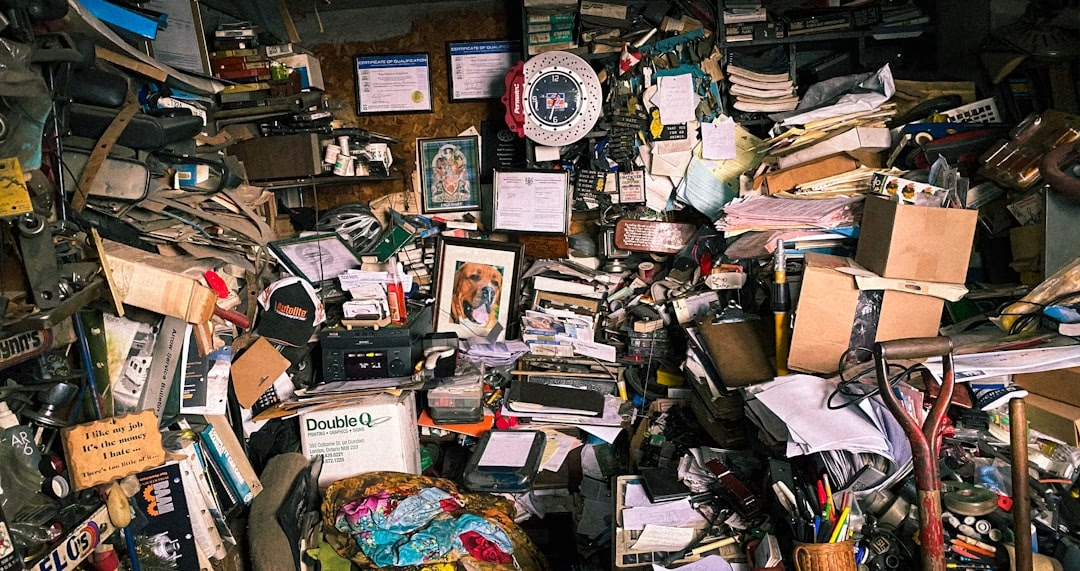
Freebies attract people with hard drives cluttered with unread PDFs and unwatched MP4s
These people were never prospects, no matter how much we like to tell ourselves they were. 90% of them were browsers collecting material and content with no intent to commit.
What you’re left with is an email list full of ghosts, a bunch of names without loyalty, inbox space with no engagement.
Different from what you may have heard, most opt-in funnels don’t build relationships.
No.
What they do is manufacture contacts.
The logic is inverted: instead of earning trust, they demand information up front. “Give me your email, then I’ll give you a taste.” What could have been an act of service turns into a bait-and-switch. The promise of value becomes a hook, and the sequence that follows feels less like nurture and more like a drip campaign of disguised pressure.
What you thought would have been a bridge to buyers becomes a wall between you and the very people you want to serve.
The cost isn’t only financial.
Weeks sink into designing freebies, wiring automations, and testing subject lines.
Solopreneurs burn energy polishing systems instead of connecting with humans.
At the end, they're left with bloated lists (and a swollen email platform monthly bill), no loyalty, and the same aching problem that started it all: no sales.
The Lie of Complexity
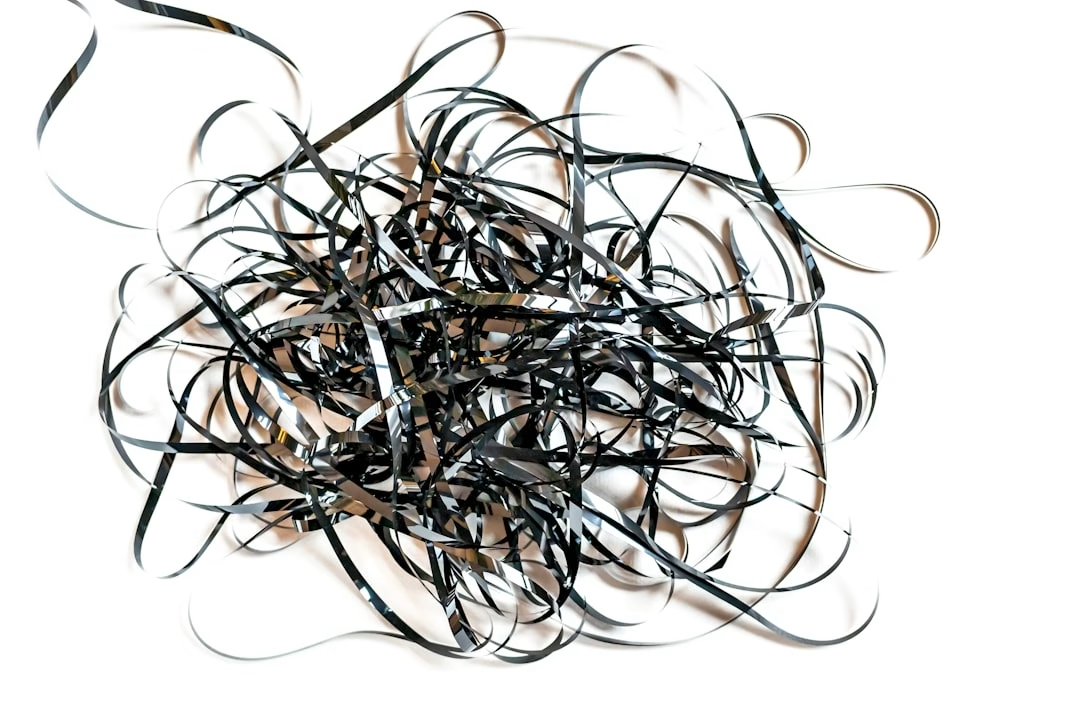
Complexity piles up fast and turns marketing into a maze of systems instead of a path to buyers
Opt-in funnels feel like factories.
Most of them fail because they're exhausting.
Gurus parade “plug-and-play” solutions as if success were one click away. In practice, though, every opt-in funnel drags you into a labyrinth of complexity: landing pages to build, CRMs to configure, automations to stack, integrations to troubleshoot, analytics dashboards to decipher, endless A/B tests to run...
The list never ends.
Marketing shouldn’t feel like building a factory. But that’s what the opt-in funnel reduces it to: inputs, outputs, mechanical steps, and constant monitoring to keep the machine alive.
For solopreneurs, this complexity becomes more than busywork. It becomes an obstacle. Then the obstacle becomes a reason to stall and to wake up already feeling behind.
The cruel irony is that the more complex the system, the further it drags you from the real work of marketing, of letting people experience what you actually offer.
Opt-in funnels bury simplicity under layers of tech. They disguise pressure as nurture. They camouflage disconnection with dashboards.
Complexity isn’t a sign of progress. It’s the mask of a broken model.
The harder you try to optimize it, the more it weighs you down until you realize the funnel never carried you forward at all. It only kept you circling in place, trapped in systems you never needed in the first place.
The Incoherence of the Funnel Metaphor
There’s another reason opt-in funnels fail us: the metaphor itself.
A funnel is a physical structure. Pour liquid at the top, and gravity guarantees it all comes out the bottom.
The relationship between seller and buyer is nothing like that.
There is no natural force pulling every person who becomes aware of your offer all the way down to a purchase.
Awareness does not equal inevitability.
Yet the language of funnels seduces us into believing otherwise, that if we just keep pouring leads into the top, something will flow out the bottom. It’s incoherent. It ignores the truth: people only move forward when they trust you, when they’ve experienced your value, when they feel ready.
No amount of gravity will carry them there. Only connection will.
This is why the very term funnel is misleading.
It doesn’t describe human behavior. It describes plumbing.
Solopreneurs aren’t plumbers of attention. We are builders of trust.
The sooner we recognize that, the sooner we can abandon the broken metaphor and replace it with a model that actually fits how people buy.
Go on to Part II: The Truth About Marketing →